


Vizen Optometric Center: Fall Into Focus, Fall Newsletter
Vision Insights: Fall 2026 Newsletter
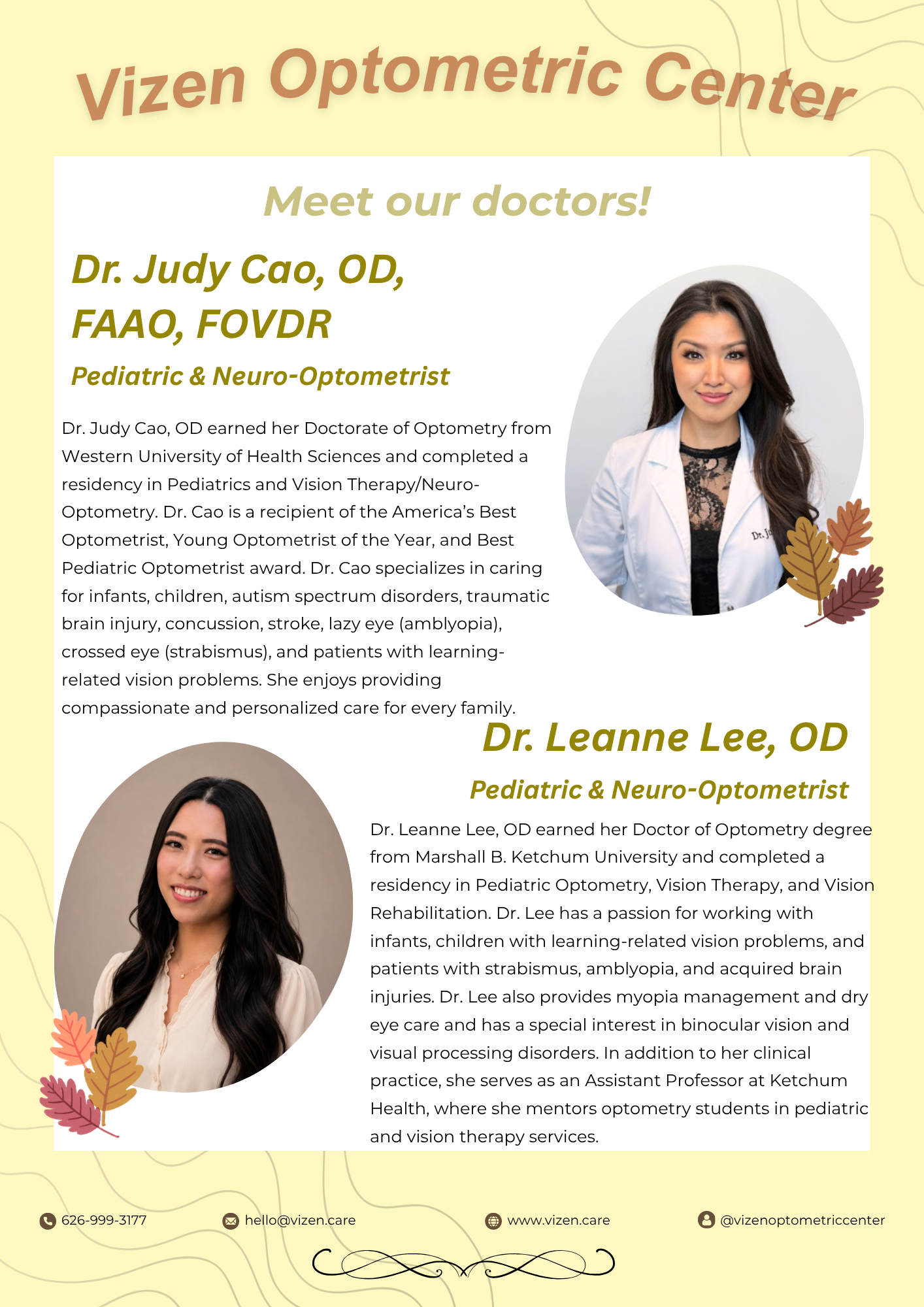
Meet Our Doctors!
Dr. Judy Cao, OD, FAAO, FOVDR
Pediatric & Neuro-Optometrist
Dr. Judy Cao, OD earned her Doctorate of Optometry from Western University of Health Sciences and completed a residency in Pediatrics and Vision Therapy/Neuro-Optometry. Dr. Cao is a recipient of the America’s Best Optometrist, Young Optometrist of the Year, and Best Pediatric Optometrist awards.
Dr. Cao specializes in caring for infants, children, autism spectrum disorders, traumatic brain injury, concussion, stroke, lazy eye (amblyopia), crossed eye (strabismus), and patients with learning-related vision problems. She enjoys providing compassionate and personalized care for every family.
Dr. Leanne Lee, OD
Pediatric & Neuro-Optometrist
Dr. Leanne Lee, OD earned her Doctor of Optometry degree from Marshall B. Ketchum University and completed a residency in Pediatric Optometry, Vision Therapy, and Vision Rehabilitation.
Dr. Lee has a passion for working with infants, children with learning-related vision problems, and patients with strabismus, amblyopia, and acquired brain injuries. Dr. Lee also provides myopia management and dry eye care and has a special interest in binocular vision and visual processing disorders.
In addition to her clinical practice, she serves as an Assistant Professor at Ketchum Health, where she mentors optometry students in pediatric and vision therapy services.
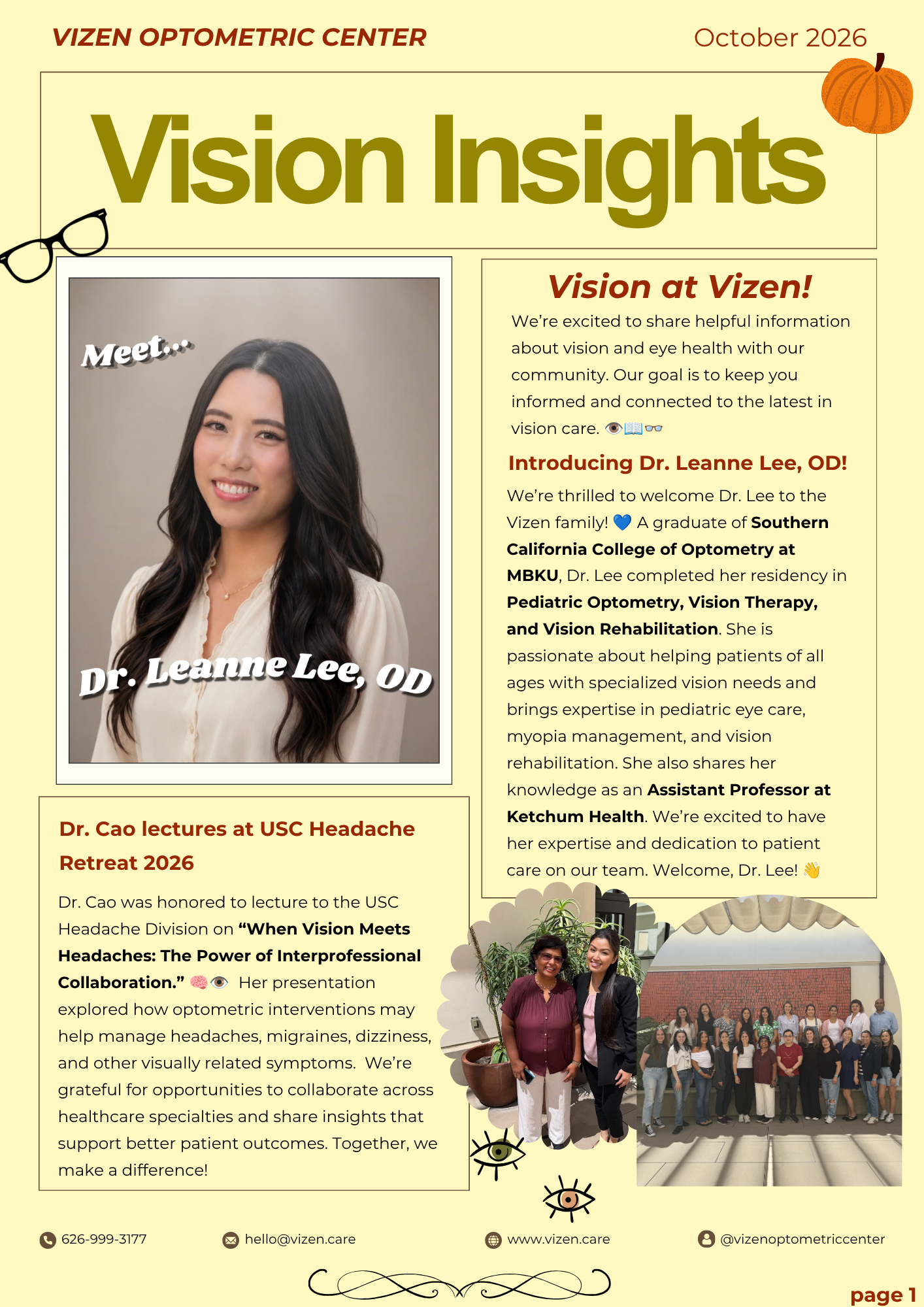
Vision at Vizen!
We're excited to share helpful information about vision and eye health with our community. Our goal is to keep you informed and connected to the latest in vision care.
Introducing Dr. Leanne Lee, OD!
We're thrilled to welcome Dr. Lee to the Vizen family! A graduate of Southern California College of Optometry at MBKU, Dr. Lee completed her residency in Pediatric Optometry, Vision Therapy, and Vision Rehabilitation.
She is passionate about helping patients of all ages with specialized vision needs and brings expertise in pediatric eye care, myopia management, and vision rehabilitation. She also shares her knowledge as an Assistant Professor at Ketchum Health.
We're excited to have her expertise and dedication to patient care on our team. Welcome, Dr. Lee!
Dr. Cao Lectures at USC Headache Retreat 2026
Dr. Cao was honored to lecture to the USC Headache Division on “When Vision Meets Headaches: The Power of Interprofessional Collaboration.”
Her presentation explored how optometric interventions may help manage headaches, migraines, dizziness, and other visually related symptoms.
We're grateful for opportunities to collaborate across healthcare specialties and share insights that support better patient outcomes. Together, we make a difference!
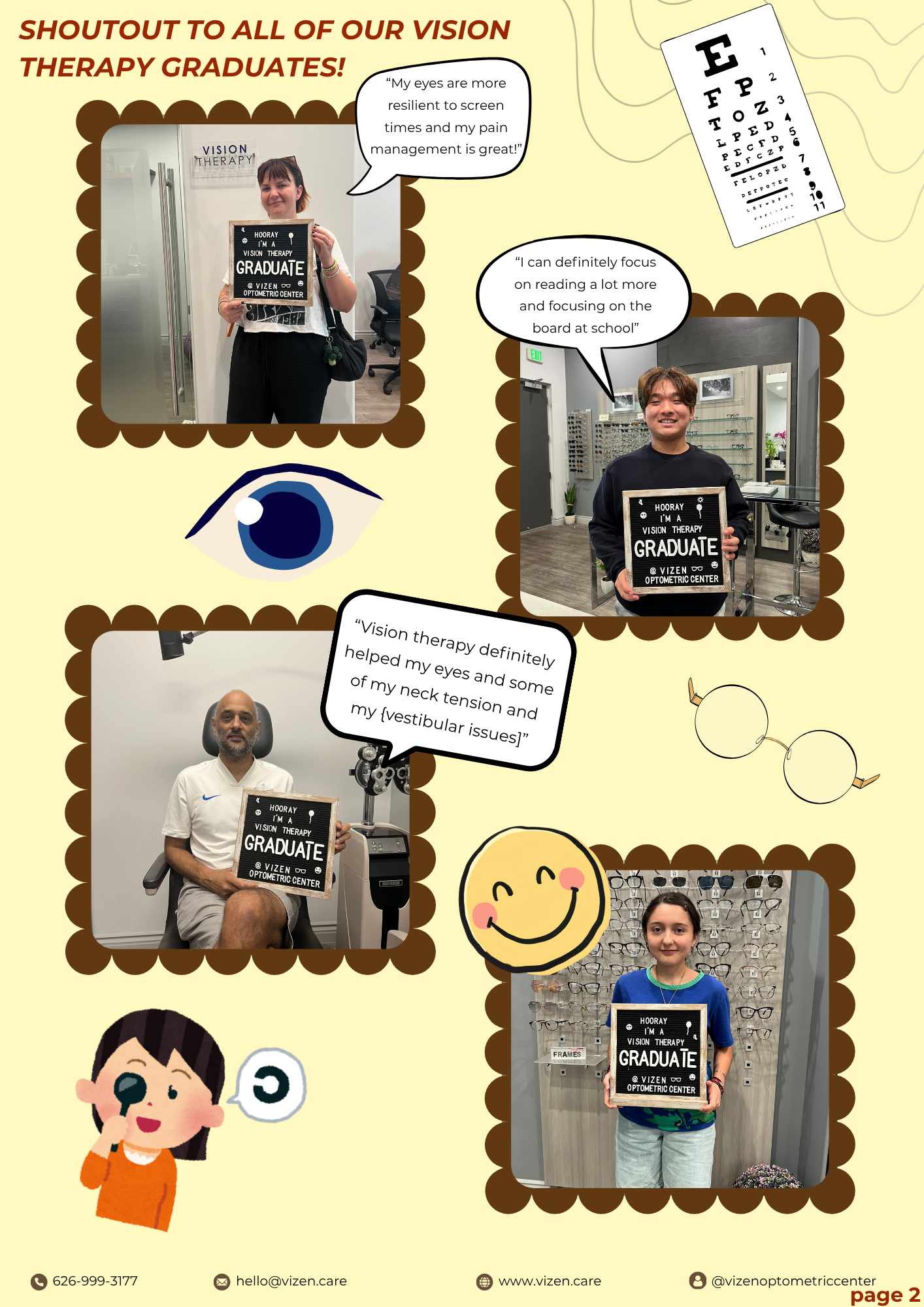
Shoutout to All of Our Vision Therapy Graduates!
Congratulations to all of our vision therapy graduates! We're proud of the dedication and progress our patients have demonstrated throughout their vision therapy journeys.
Here are a few reflections from our graduates:
“My eyes are more resilient to screen times and my pain management is great!”
“I can definitely focus on reading a lot more and focusing on the board at school.”
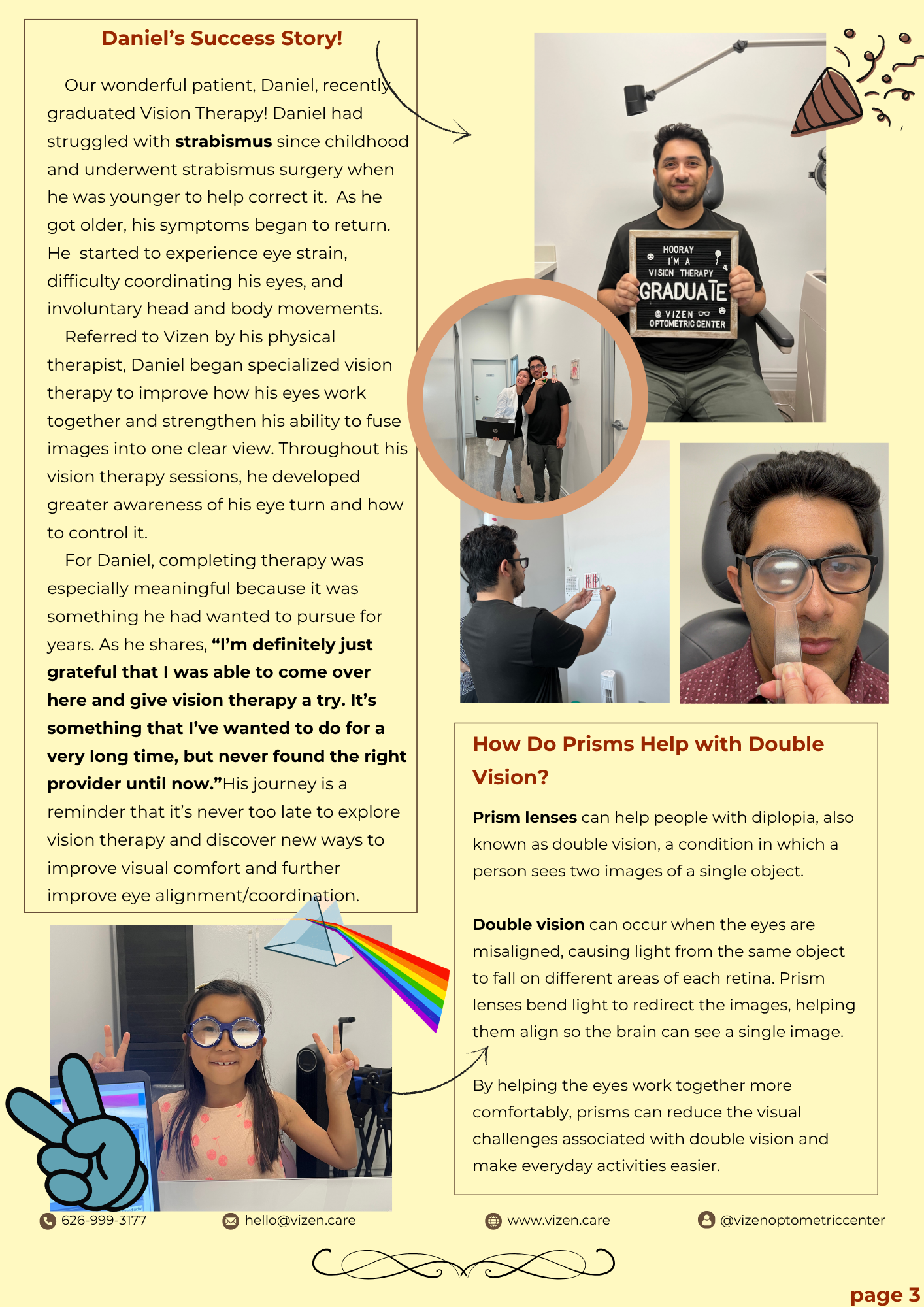
Daniel's Success Story!
Our wonderful patient, Daniel, recently graduated from Vision Therapy!
Daniel had struggled with strabismus since childhood and underwent strabismus surgery when he was younger to help correct it. As he got older, his symptoms began to return. He started to experience eye strain, difficulty coordinating his eyes, and involuntary head and body movements.
Referred to Vizen by his physical therapist, Daniel began specialized vision therapy to improve how his eyes work together and strengthen his ability to fuse images into one clear view. Throughout his vision therapy sessions, he developed greater awareness of his eye turn and how to control it.
For Daniel, completing therapy was especially meaningful because it was something he had wanted to pursue for years.
As he shares:
“I’m definitely just grateful that I was able to come over here and give vision therapy a try. It’s something that I’ve wanted to do for a very long time, but never found the right provider until now.”
His journey is a reminder that it’s never too late to explore vision therapy and discover new ways to improve visual comfort and further improve eye alignment and coordination.
How Do Prisms Help with Double Vision?
Prism lenses can help people with diplopia, also known as double vision, a condition in which a person sees two images of a single object.
Double vision can occur when the eyes are misaligned, causing light from the same object to fall on different areas of each retina. Prism lenses bend light to redirect the images, helping them align so the brain can see a single image.
By helping the eyes work together more comfortably, prisms can reduce the visual challenges associated with double vision and make everyday activities easier.
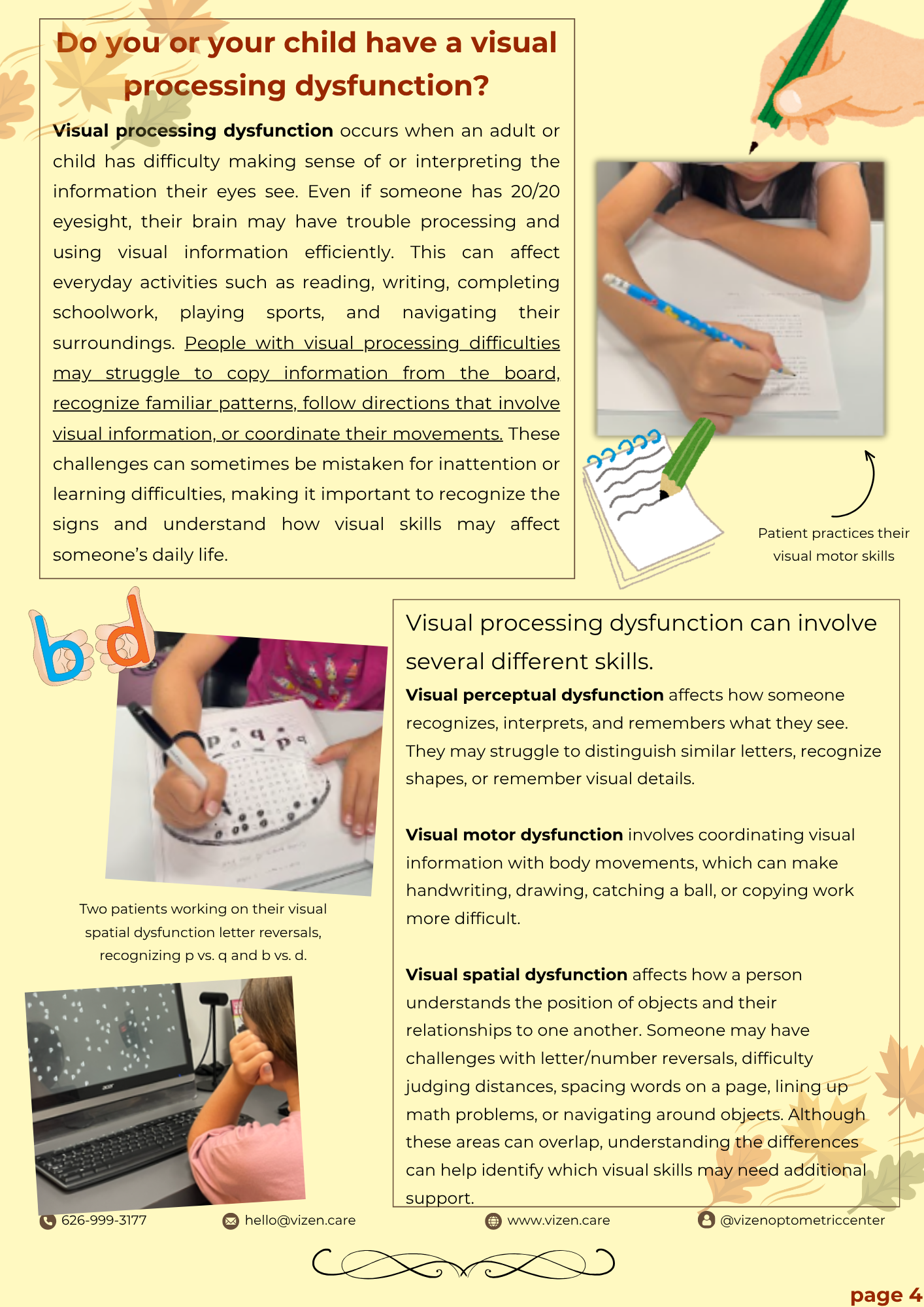
Do You or Your Child Have a Visual Processing Dysfunction?
Visual processing dysfunction occurs when an adult or child has difficulty making sense of or interpreting the information their eyes see. Even if someone has 20/20 eyesight, their brain may have trouble processing and using visual information efficiently.
This can affect everyday activities such as reading, writing, completing schoolwork, playing sports, and navigating their surroundings. People with visual processing difficulties may struggle to recognize familiar patterns, follow directions that involve visual information, or coordinate their movements.
These challenges can sometimes be mistaken for inattention or learning difficulties, making it important to recognize the signs and understand how visual skills may affect someone's daily life.
Visual Processing Dysfunction Can Involve Several Different Skills
Visual Perceptual Dysfunction
Visual perceptual dysfunction affects how someone recognizes, interprets, and remembers what they see. They may struggle to distinguish similar letters, recognize shapes, or remember visual details.
Visual Motor Dysfunction
Visual motor dysfunction involves coordinating visual information with body movements, which can make handwriting, drawing, catching a ball, or copying work more difficult.
Visual Spatial Dysfunction
Visual spatial dysfunction affects how a person understands the position of objects and their relationships to one another. Someone may have challenges with letter and number reversals, difficulty judging distances, spacing words on a page, lining up math problems, or navigating around objects.
Although these areas can overlap, understanding the differences can help identify which visual skills may need additional support.
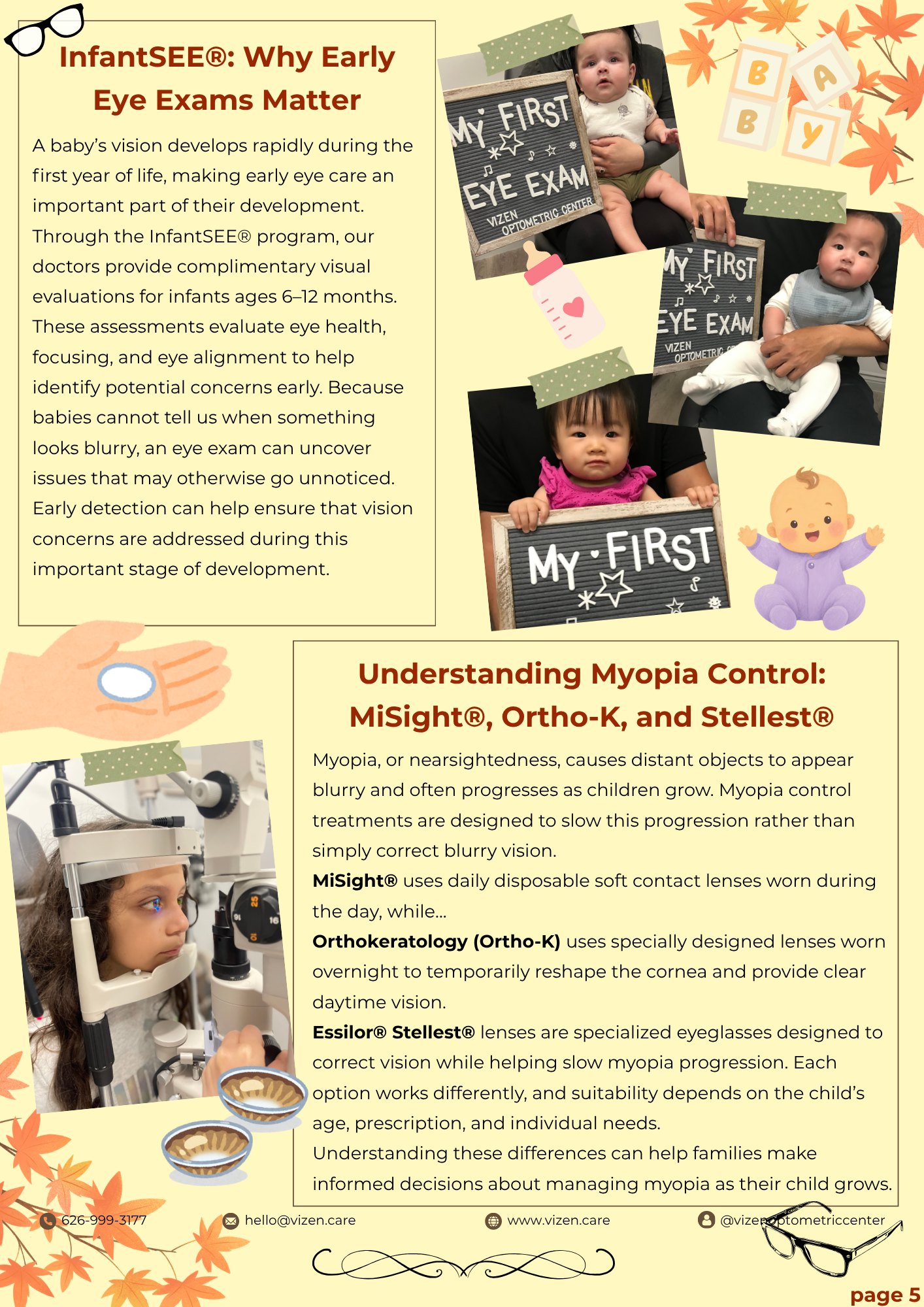
InfantSEE®: Why Early Eye Exams Matter
A baby's vision develops rapidly during the first year of life, making early eye care an important part of their development.
Through the InfantSEE® program, our doctors provide complimentary visual evaluations for infants ages 6–12 months. These assessments evaluate eye health, focusing, and eye alignment to help identify potential concerns early.
Because babies cannot tell us when something looks blurry, an eye exam can uncover issues that may otherwise go unnoticed. Early detection can help ensure that vision concerns are addressed during this important stage of development.
Understanding Myopia Control: MiSight®, Ortho-K, and Stellest®
Myopia, or nearsightedness, causes distant objects to appear blurry and often progresses as children grow. Myopia control treatments are designed to slow this progression rather than simply correct blurry vision.
MiSight® Contact Lenses
MiSight® uses daily disposable soft contact lenses worn during the day.
Orthokeratology (Ortho-K)
Orthokeratology (Ortho-K) uses specially designed lenses worn overnight to temporarily reshape the cornea and provide clear daytime vision.
Essilor® Stellest® Lenses
Essilor® Stellest® lenses are specialized eyeglasses designed to correct vision while helping slow myopia progression.
Each option works differently, and suitability depends on the child's age, prescription, and individual needs.
Understanding these differences can help families make informed decisions about managing myopia as their child grows.
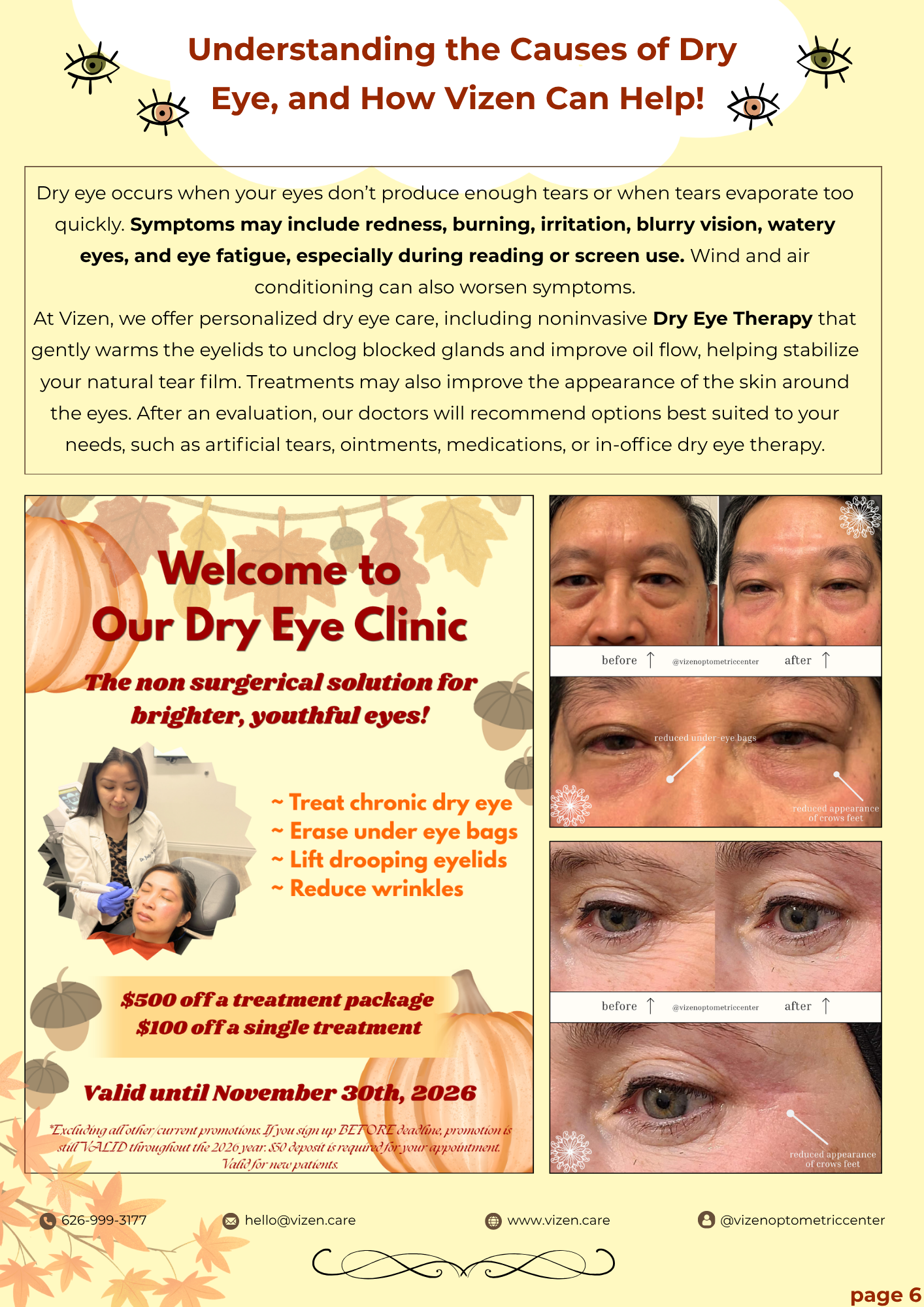
Understanding the Causes of Dry Eye, and How Vizen Can Help!
Dry eye occurs when your eyes don't produce enough tears or when tears evaporate too quickly. Symptoms may include redness, burning, irritation, blurry vision, watery eyes, and eye fatigue, especially during reading or screen use. Wind and air conditioning can also worsen symptoms.
At Vizen, we offer personalized dry eye care, including noninvasive Dry Eye Therapy that gently warms the eyelids to unclog blocked glands and improve oil flow, helping stabilize your natural tear film. Treatments may also improve the appearance of the skin around the eyes.
After an evaluation, our doctors will recommend options best suited to your needs, such as artificial tears, ointments, medications, or in-office dry eye therapy.
Welcome to Our Dry Eye Clinic!
The non-surgical solution for brighter, youthful eyes!
Our treatment may help with:
Treating chronic dry eye
Reducing under-eye bags
Lifting drooping eyelids
Reducing wrinkles
Special Offer:
$500 off a treatment package
$100 off a single treatment
Valid until November 30, 2026. Additional terms and conditions may apply. Please contact Vizen for details and eligibility.
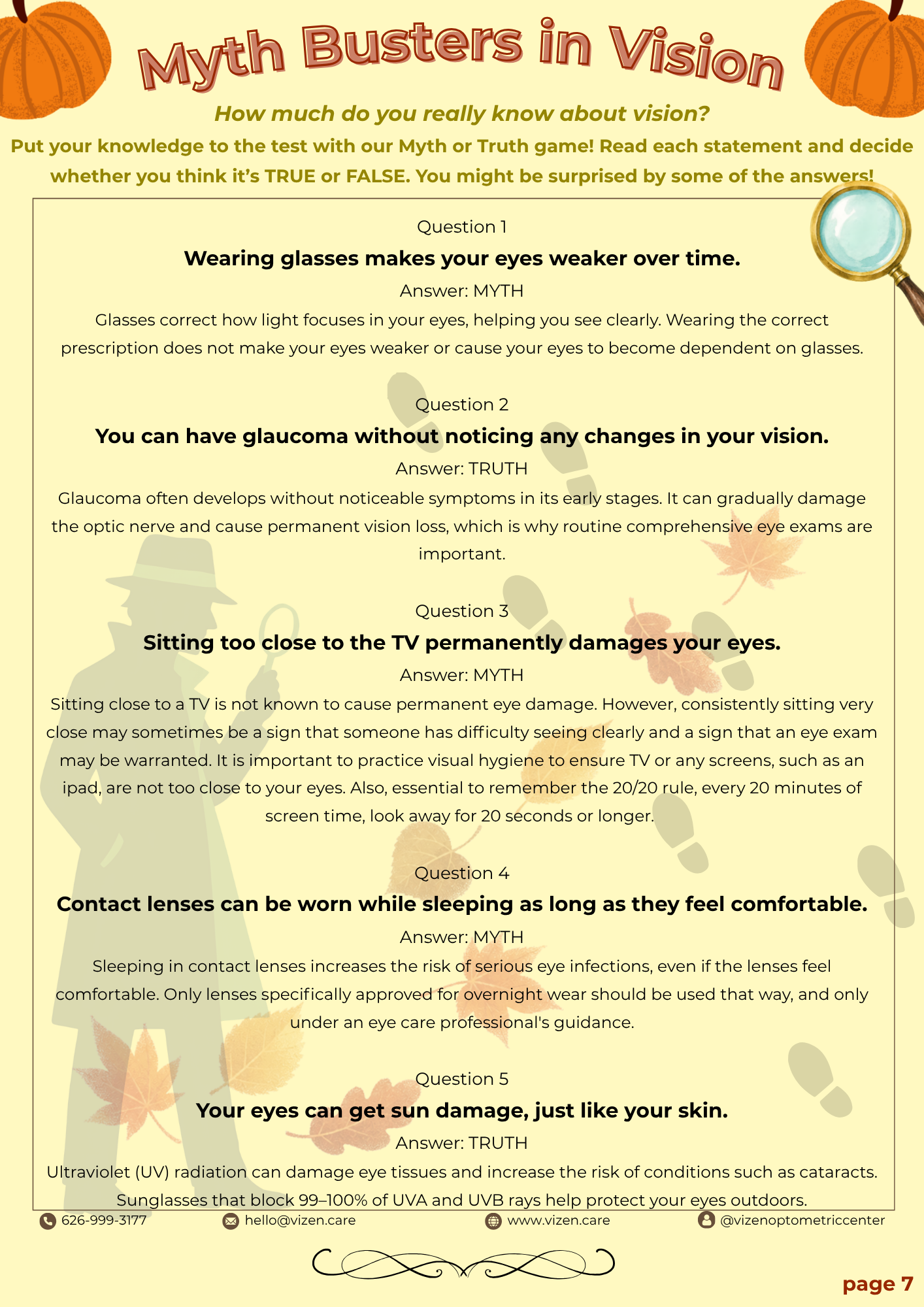
Myth Busters in Vision
How much do you really know about vision?
Put your knowledge to the test with our Myth or Truth game! Read each statement and decide whether you think it's TRUE or FALSE. You might be surprised by some of the answers!
Question 1: Wearing glasses makes your eyes weaker over time.
Answer: MYTH
Glasses correct how light focuses in your eyes, helping you see clearly. Wearing the correct prescription does not make your eyes weaker or cause your eyes to become dependent on glasses.
Question 2: You can have glaucoma without noticing any changes in your vision.
Answer: TRUTH
Glaucoma often develops without noticeable symptoms in its early stages. It can gradually damage the optic nerve and cause permanent vision loss, which is why routine comprehensive eye exams are important.
Question 3: Sitting too close to the TV permanently damages your eyes.
Answer: MYTH
Sitting close to a TV is not known to cause permanent eye damage. However, consistently sitting very close may sometimes be a sign that someone has difficulty seeing clearly and that an eye exam may be warranted.
It is important to practice visual hygiene to ensure the TV or other screens, such as an iPad, are not too close to your eyes. Also, remember the 20/20 rule: every 20 minutes of screen time, look away for 20 seconds or longer.
Question 4: Contact lenses can be worn while sleeping as long as they feel comfortable.
Answer: MYTH
Sleeping in contact lenses increases the risk of serious eye infections, even if the lenses feel comfortable. Only lenses specifically approved for overnight wear should be used that way, and only under an eye care professional's guidance.
Question 5: Your eyes can get sun damage, just like your skin.
Answer: TRUTH
Ultraviolet (UV) radiation can damage eye tissues and increase the risk of conditions such as cataracts. Sunglasses that block 99–100% of UVA and UVB rays help protect your eyes outdoors.
Thanks for Reading!
Want more?
Follow us on social media to learn more about vision at Vizen!
Contact Us
Phone: (626) 667-2700
Email: hello@vizen.care
Website: www.vizen.care
Instagram: @vizenoptometriccenter
TikTok: @vizenoptometriccenter
Facebook: www.facebook.com/vizenoptometriccenter
Quick Links

All Eye
Care Services

Keep
In Touch
MAP
© 2026 Vizen Optometric Center. All Rights Reserved. Accessibility Statement - Privacy Policy - Sitemap
Powered by: 
