


Backed by Science: The Role of Vision Therapy in Reducing Balance Disorders
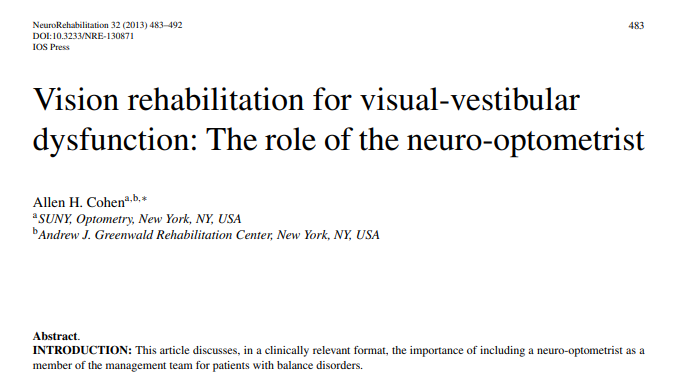
Ever wondered why Physical therapists or Vestibular therapists often refer their patients to a Neuro-Optometrist? The research article " Vision rehabilitation for visual-vestibular dysfunction: The role of the neuro-optometrist" by Allen H. Cohen discusses the importance of collaboration with a neuro-optometrist in the treatment of patients with balance disorders such as imbalance, dizziness, vertigo and disequilibrium. The author explains that balance is maintained through the integration of the visual vestibular and somatosensory systems and emphasizes that disruptions in visual processing such as poor eye coordination or unstable binocular vision can significantly worsen balance issues.
A major focus of the article is the vestibular ocular reflex also known as VOR which helps stabilize vision during movement and how visual dysfunction can interfere with this process leading to symptoms that affect daily functioning.
This directly relates to the work done at Vizen Optometric Center where neuro-optometric rehabilitation (vision therapy) is used to treat patients with similar visual and balance-related challenges. As the article highlights, combining neuro-optometric rehabilitation with other therapies is often the most effective approach. This aligns with the clinic’s practice of working with physical/vestibular therapy referrals since both vision therapy and physical therapy address different parts of the same integrated system. By improving visual function alongside vestibular and physical rehabilitation patients can achieve better balance reduced dizziness and improved overall quality of life.
Want to read more?
Vision Rehabilitation for Visual-Vestibular Dysfunction: The role of the Neuro-Optometrist
Quick Links

All Eye
Care Services

Keep
In Touch
MAP
© 2026 Vizen Optometric Center. All Rights Reserved. Accessibility Statement - Privacy Policy - Sitemap
Powered by: 
